Ceramic Teapot: A Pro Review for Branded Merch
As an embroidery designer who has spent years digitizing and reviewing files for commercial use, I approach every new machine embroidery design with a critical eye. It is not just about whether it looks cute on a screen; it is about how it performs on a cap, a tote bag, or a staff uniform after fifty washes. Today, I am reviewing the Ceramic Teapot, a redwork-style file that promises to add a nice accent to kitchen textiles. While the product description highlights its use on towels and table cloths, my focus is on its viability for small business merch, branded patches, and professional apparel decoration.
First Impressions: Visual Personality and Brand Fit
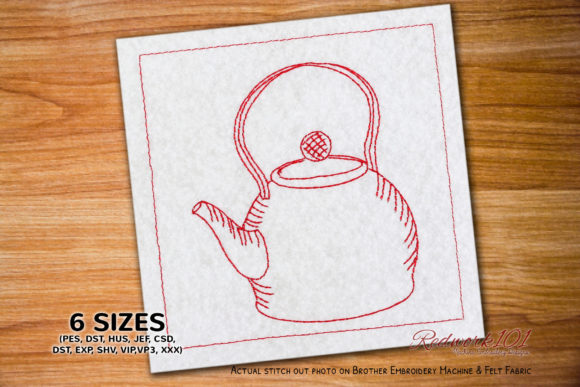
The moment you load the Ceramic Teapot into your viewer, the aesthetic is immediately clear. This is not a hyper-realistic or overly complex digital render; it is a charming, line-based illustration typical of redwork. The style feels friendly, rustic, and undeniably handmade. For a boutique bakery, a local café, a florist, or an Etsy seller specializing in home goods, this visual language is gold. It communicates warmth and approachability without screaming "corporate."
However, for high-end luxury brands or tech-focused companies, this design might feel too casual. Its strength lies in its simplicity. The lack of heavy fill stitches suggests a vintage appeal that works exceptionally well for businesses wanting to project authenticity. When considering brand identity, this design serves as a perfect secondary logo or a thematic accent rather than a primary corporate mark. It tells a story of comfort and tradition, which is exactly what many small business merch strategies aim to achieve.
Real-World Application in Commercial Embroidery
Let's move beyond the theoretical and discuss where this digital embroidery file actually shines in a production environment. The description notes it stitches nicely on aprons and towels, but let's expand that scope.
- Staff Uniforms and Aprons: For a coffee shop or tea room, placing this design on the chest of a linen apron creates an instant connection with customers. The redwork style ensures the apron embroidery remains breathable and flexible, avoiding the stiff "cardboard" feel of heavy satin fills.
- Embroidered Patches: This is perhaps the most versatile application. Because the design relies on outlines, it translates beautifully to an embroided patch. You can create a run of these for staff hats or sell them as standalone collectibles. The clean lines make die-cutting or merrow edging much easier for patch manufacturers.
- Tote Bags and Packaging: Canvas tote bags are a staple for retail brands. The Ceramic Teapot works wonderfully as a tote bag design, offering a subtle brand marker that doesn't overwhelm the bag's utility. It can also be used as a decorative element on fabric packaging accents.
- Cap Embroidery: Placing this on the side panel of a dad hat or a visor is a strong option. The curvature of a cap can distort complex designs, but the simple geometry of a teapot holds up well under tension.
Technical Considerations and Production Challenges
While the aesthetic is appealing, a professional reviewer must address the technical constraints. Redwork designs are generally forgiving, but there are specific scenarios where the Ceramic Teapot requires careful handling.
Stitch Density and Fabric Texture: One of the advantages of this style is low stitch density. This means less puckering on lightweight fabrics like cotton tea towels or poly-cotton blends used in uniforms. However, if you are stitching on a textured fabric like a waffle weave or a thick terrycloth towel, you must ensure the running stitches are long enough to bridge the gaps in the fabric texture. If the stitches are too short, they may sink into the pile, making the design invisible.
Thread Colors and Contrast: The term "redwork" implies a single color, traditionally red, on a white background. In a commercial setting, you have more freedom. If you are stitching this on a dark uniform, you must invert the thread color or choose a high-contrast shade. Be wary of using light threads on dark fabrics without a proper underlay, as the fabric might show through the running stitches. Always test your thread colors against the specific garment stock you intend to use.
Sizing Limitations: This is critical. Do not attempt to shrink this design down to a tiny chest logo (under 1.5 inches) without checking the stitch length. Running stitches that are too short become fragile and prone to breaking. If the original file does not include multiple sizes, you may need to request different hoop size versions from the vendor or manually adjust the density if you have editing software.
Impact on Customer Trust and Product Value
In the world of handmade products and custom apparel, consistency is key to building trust. Using a cohesive set of design assets like the Ceramic Teapot across your product line elevates the perceived value of the finished product. A customer receiving a tea towel with a crisp, well-executed embroidery perceives the brand as attentive to detail.
Furthermore, this design aids in recognition. If a café uses this teapot on their menus, their signage, and their staff aprons, it creates a visual anchor. It moves the item from being a generic commodity to a branded experience. For Etsy sellers, having unique embroidery that isn't found on every other mass-market item can be the deciding factor in a purchase. It signals that the item is a handmade product crafted with care, justifying a higher price point.
Essential Designer Notes for Business Use
Before you commit to a large production run or list this as part of your inventory, follow these practical steps to ensure quality control:
- Test in Black and White First: Remove color variables to check the integrity of the lines. If the shape loses definition in grayscale, it may lack contrast in real-world lighting.
- Verify Small Patch Viability: Stitch a sample at the smallest intended size. Pull on the fabric gently to ensure the running stitches do not gap or break.
- Check Stabilizer Requirements: Even with low density, the right stabilizer is crucial. For stretchy fabrics like jersey caps, use a cut-away. For stable woven linens, a tear-away may suffice.
- Create a Printable Mockup: Before stitching, generate a printable mockup to show clients or visualize the placement on custom apparel. This saves time and thread.
- Confirm Licensing: The description mentions the design is for kitchen accents, but for commercial embroidery projects involving resale, you must confirm the license terms. Ensure you have the rights to use the embroidery file for merchandise intended for sale.
- Review the Box Stitch Option: The description notes a "Box Stitch" is optional. If this refers to a framing element, decide if it adds value or clutter. For small patches, removing extra borders often yields a cleaner look.
In conclusion, the Ceramic Teapot is a solid contender for businesses in the Kitchen and hospitality sectors looking to enhance their Embroidery offerings. It balances charm with technical feasibility, provided the operator respects the limitations of running stitch designs. With proper testing and strategic placement, it can become a signature element of your brand's physical presence.