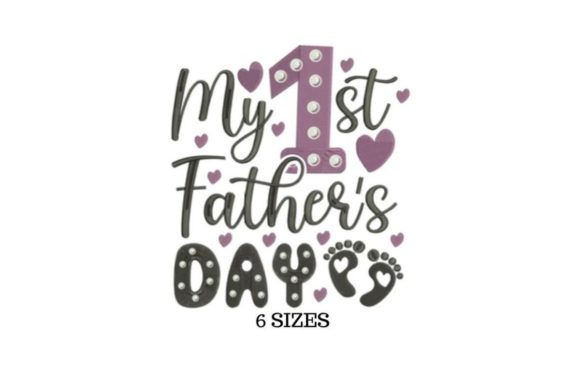
My First Father's Day: A Designer's Review for Small Business Merch
As an embroidery designer who spends countless hours digitizing and testing files for commercial use, I approach every new machine embroidery design with a critical eye. It is not just about whether a pattern looks cute on a screen; it is about how it performs on actual fabric, how it holds up after washing, and most importantly, how it serves the brand identity of the small businesses that rely on these assets. Today, I am reviewing "My First Father s Day," a design positioned squarely in the Father S Day category. This review is written specifically for embroidery shops, apparel decorators, handmade brands, Etsy sellers, and product designers looking to expand their seasonal offerings with high-quality Embroidery.
First Impressions: Visual Personality and Market Fit
Upon initial inspection, "My First Father s Day" projects a distinctively warm and celebratory vibe. The title suggests a focus on milestone moments, which immediately signals its potential as a sentimental keepsake rather than just a generic holiday graphic. In the world of small business merch, emotional connection drives sales. This design feels friendly and playful, likely utilizing soft curves or whimsical typography that appeals to new parents and gift-givers. It strikes a balance between rustic charm and modern simplicity, making it versatile enough for a boutique baby store or a custom apparel shop.
For a business owner, the visual personality of a design dictates where it can be placed. Because this piece celebrates a "first" holiday, it carries a premium feel suitable for heirloom-quality items. It does not scream "mass-produced"; instead, it invites the viewer to appreciate the handmade product aesthetic. This is crucial for brands trying to differentiate themselves from big-box retailers. When you offer a design like this, you are selling a memory, not just a stitched logo.
Real-World Application in Commercial Embroidery
The true test of any digital embroidery file is its adaptability across various products. "My First Father s Day" shows immense promise for several key applications in a commercial setting:
- Embroidered Patches: This is perhaps the strongest use case. Creating a limited-run patch for customers to iron onto denim jackets or diaper bags adds significant perceived value. The design's likely bold outlines would translate well into a merrow-edge or laser-cut patch format.
- Cap Embroidery: Father's Day is a massive driver for hat sales. Placing this design on the front panel of a dad cap or a structured trucker hat creates an instant bestseller. However, the curvature of the cap requires careful digitizing to prevent distortion.
- Apron Embroidery: For the "grilling dad" or the baking enthusiast, stitching this onto a heavy-duty canvas apron transforms a utility item into a personalized gift. The text-heavy nature of the title works well on the chest bib of an apron.
- Tote Bag Design: Canvas totes are staples for eco-friendly boutiques. Using this design as a central motif on a tote bag creates a practical yet sentimental carrier for baby gear or grocery runs.
- Staff Uniforms and Work Shirts: While primarily a consumer gift, creative studios or family-oriented businesses could use this on staff uniforms during the holiday season to foster a community atmosphere.
Furthermore, this design serves as an excellent asset for creating printable mockups. Before committing to thread and fabric, you can showcase this design on various product templates to gauge customer interest on your Etsy shop or website. It acts as a versatile component in your broader library of design assets.
Technical Considerations and Production Challenges
While the aesthetic appeal is high, a professional reviewer must address the technical hurdles. "My First Father s Day" contains specific elements that require attention before running a production batch. If the design includes fine lettering or intricate details, it may struggle on textured fabrics like pique polo shirts or thick terrycloth towels. High stitch density can lead to puckering if not managed correctly, especially on stretchy materials used in baby onesies.
There are specific scenarios where this design should be used with caution:
- Small Patch Sizes: If scaling the design down for a small chest logo or a sleeve detail, ensure the text remains legible. Tiny lettering can fill in and become unreadable if the stitch count is too high for the size.
- Curved Surfaces: As mentioned with caps, sewing on curved surfaces requires a experienced operator. The design might need to be split or adjusted to accommodate the curve without warping the letters.
- Dark Uniforms: If the original file relies on light thread colors, it may lack contrast on black or navy garments. You may need to manually adjust the thread colors in your embroidery software to ensure visibility.
- Frequent Washing: Items like aprons and work shirts undergo rigorous cleaning. Ensure the underlay stitches are sufficient to prevent the design from lifting or fraying over time.
It is vital to note that the product description mentions the design comes as a machine embroidery file but does not specify exact stitch counts, supported formats, or precise hoop requirements. Therefore, I strongly advise checking these technical specifications with the vendor before purchasing. Knowing the hoop size limitation is essential to avoid buying a file that doesn't fit your machine's capabilities.
Elevating Brand Identity and Customer Trust
Incorporating "My First Father s Day" into your product line does more than fill a seasonal gap; it enhances your overall brand identity. When customers see consistent, high-quality embroidery on your merchandise, it builds trust. They begin to associate your brand with professionalism and attention to detail. A poorly executed design can damage a reputation, but a well-chosen, well-stitched design like this reinforces the idea that your business cares about quality.
This design also boosts product value. A plain t-shirt might sell for $15, but the same shirt featuring a perfectly centered, crisp "My First Father s Day" embroidery can command $30 or more. The perceived value of custom apparel lies in the personalization. By offering this as a branded add-on or a standalone finished product, you increase your average order value. Additionally, for Etsy sellers, using trending yet timeless themes helps with search visibility and buyer engagement during the critical spring shopping window.
Practical Notes for the Professional Designer
Before launching this design into your commercial workflow, follow these practical steps to ensure success:
- Test in Black and White: Convert the design to a single color in your software to check the integrity of the shapes and spacing without the distraction of color.
- Verify Small Scale Legibility: Stitch a sample at the smallest intended size (e.g., 2 inches) to confirm the text is readable.
- Check Thread Contrast: Experiment with contrasting thread colors against your most common fabric stocks to guarantee the design pops.
- Inspect Spacing: Look for areas where stitches might be too close together, which can cause thread breaks or bird nesting.
- Confirm Hoop Size: Measure the design dimensions against your available hoops to ensure it fits without re-hooping.
- Test on Real Fabric: Never rely solely on screen simulations. Stitch on the actual fabric types you plan to sell (e.g., cotton, poly-blend, canvas).
- Use Proper Stabilizer: Match your stabilizer choice to the fabric weight. Heavy designs need cut-away stabilizer for durability, while lighter fabrics may only need tear-away.
- Create a Mockup: Generate a digital mockup for client approval before stitching the final garment to manage expectations.
- Compare Design Assets: Place this design next to your existing portfolio to ensure it maintains visual consistency with your brand style.
- Confirm Commercial Licensing: Most critically, verify the license terms. Ensure you have the right to use this digital embroidery file for physical goods you intend to sell, not just for personal use.
In conclusion, "My First Father s Day" is a promising asset for any embroidery business looking to capitalize on the emotional resonance of the holiday season. With careful technical preparation and strategic placement on the right products, it can become a cornerstone of your seasonal commercial embroidery lineup, driving both sales and brand loyalty.