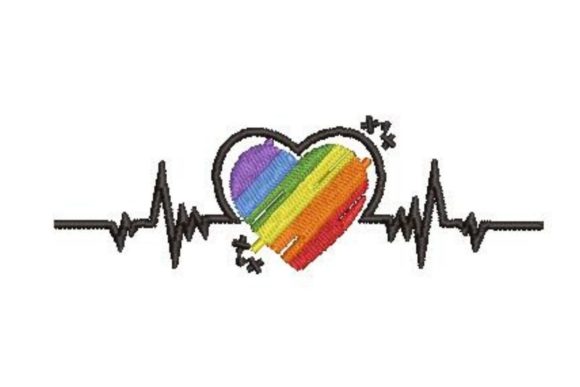
Heartbeat Pride Heart: A Designer's Review for Real Projects
As a designer who spends more time staring at stitch maps than most people spend looking at their phones, I approach every new machine embroidery design with a mix of curiosity and skepticism. We've all been there: you download a file that looks perfect on the screen, only to watch it pucker, gap, or lose its charm once the needle hits the fabric. That is why I took a close look at the Heartbeat Pride Heart before committing it to any client work or personal projects. This isn't just about whether it looks cute; it's about whether it holds up as a professional asset for your craft business.
The first impression of this design is undeniably warm. It captures a specific mood—support, love, and vitality—by merging the universal symbol of the heart with the rhythmic line of an EKG. For those of us creating Awareness products, specifically within the LGBT community context described in the product notes, the visual language here is clear without being overly aggressive. It feels like a design that belongs on a well-loved item rather than a stiff display piece. The layout suggests a balance between the organic curve of the heart and the geometric precision of the heartbeat line, which is always a tricky negotiation in embroidery.
Putting It to the Test: Real-World Application
To truly evaluate the Heartbeat Pride Heart, I imagined a specific scenario that many of you face daily: a custom order for a local boutique needing a run of tote bags for a pride month event. The client wants something that says "support" but also looks like a high-end handmade product, not a cheap promotional giveaway. This is where the design's potential shines. Because the concept relies on a strong silhouette, it translates well to a tote bag design where visibility matters from a distance.
I also considered how this would perform as sweatshirt embroidery. There is a growing market for subtle, meaningful apparel, and this motif fits perfectly on the left chest of a hoodie or the center of a crewneck. The flow of the heartbeat line offers a natural leading line for the eye, making it engaging even when stitched in a single color. If you are an Etsy seller looking to expand your catalog beyond generic text-based designs, this offers a graphical element that can stand alone or be paired with custom lettering for a personalized gift.
However, the description notes that it "stitches out wonderfully to any type of fabric." As a practitioner, I have to pause there. While the sentiment is optimistic, no design is truly universal without adjustments. The success of this embroidery project depends heavily on your material choice. On a sturdy cotton canvas tote, the stitches will likely sit proud and crisp. On a thin, stretchy jersey knit for a baby onesie, you need to be much more careful. The interplay between the fill stitch areas of the heart and the potentially finer running stitch or satin stitch of the heartbeat line requires a stable foundation.
Technical Considerations for the Professional Maker
Let's talk about the technical realities that separate a hobbyist attempt from a commercial embroidery ready product. When working with the Heartbeat Pride Heart, stitch density is your primary concern. If the heart portion is heavily filled, it can cause pulling on lighter fabrics. Before stitching your final finished product, you must test the design on scrap fabric that matches your actual job material. This is non-negotiable.
Pay close attention to the transition points where the heartbeat line enters and exits the heart shape. These are common failure points where threads can break or loop if the tension isn't dialed in. If you are using this as an applique design (assuming the file supports it or you modify it), ensure your tack-down stitches are secure. For standard digitized versions, check if the corners of the heart are sharp or rounded; sharp corners often require a higher stitch count to maintain definition, which adds bulk.
Fabric texture plays a massive role here. On a textured towel or a waffle-knit apron, fine details might get lost. In those cases, increasing the scale of the design or simplifying the background elements might be necessary. Conversely, on smooth performance fabrics, you might need a cut-away stabilizer to prevent the design from distorting after the first wash. Remember, a design that looks great on the hoop might sag after three cycles in the laundry if the stabilizer strategy was weak.
Navigating Challenges and Maximizing Value
There are specific situations where you should use the Heartbeat Pride Heart with caution. Small hoop sizes can be restrictive if the design has a wide aspect ratio due to the extended heartbeat line. Always confirm the dimensions against your available hoops before promising a placement on a cap or a small pocket. Speaking of caps, curved surfaces are tricky. The flat nature of a heartbeat line might warp visually if stitched over the front panel of a structured hat without proper hoarding techniques or foam backing.
Color selection is another area where your expertise adds value. While the theme suggests vibrant rainbow thread colors, consider how the design performs in monochrome. A black-on-white or white-on-navy version of this digital embroidery file can be incredibly striking and versatile for customers who prefer understated style. Test your design in black and white mockups to ensure the contrast holds up. If the heartbeat line disappears against the heart fill in a single-color scheme, you may need to adjust the stitch type or spacing.
From a business perspective, this design enhances brand consistency for shops focusing on inclusive messaging. It builds customer trust because it shows you offer thoughtful, relevant imagery rather than generic clip-art conversions. For small shop product lines, having a cohesive set of awareness-themed designs can drive engagement during key cultural moments. Whether it's for holiday embroidery gifts, wedding favors for inclusive couples, or nursery decor, the emotional resonance of the piece adds perceived value to your custom apparel.
Final Verdict and Designer Notes
The Heartbeat Pride Heart is a solid contender for your library, provided you treat it with the technical respect it deserves. It is not a "load and go" solution for every scenario, but rather a flexible asset that rewards preparation. To get the best results, follow these practical steps:
- Test First: Always stitch a sample on the exact fabric weight you intend to use for the final job.
- Check Density: Inspect the back of your test stitch-out. If there is excessive thread buildup, consider reducing density in your software if you have editing capabilities.
- Stabilizer Strategy: Match your stabilizer to the fabric stretch. Use cut-away for knits and tear-away for stable wovens.
- Verify Licensing: The product description mentions it comes with multiple extensions, but always confirm the license terms before selling items made with this embroidery file. Ensure you are compliant for commercial use.
- Scale Appropriately: Don't shrink it too small. Fine details in the heartbeat line need room to breathe to remain legible.
In the world of design assets, reliability is king. The Heartbeat Pride Heart offers a meaningful aesthetic that resonates with current social values. By understanding its limitations regarding hoop size, fabric compatibility, and stitch structure, you can transform a simple digital file into a standout embroidered patch, a cherished baby embroidery item, or a best-selling listing in your online store. It is a reminder that good design is only half the battle; execution is what turns a stitch pattern into a product people love.